Opening Hook
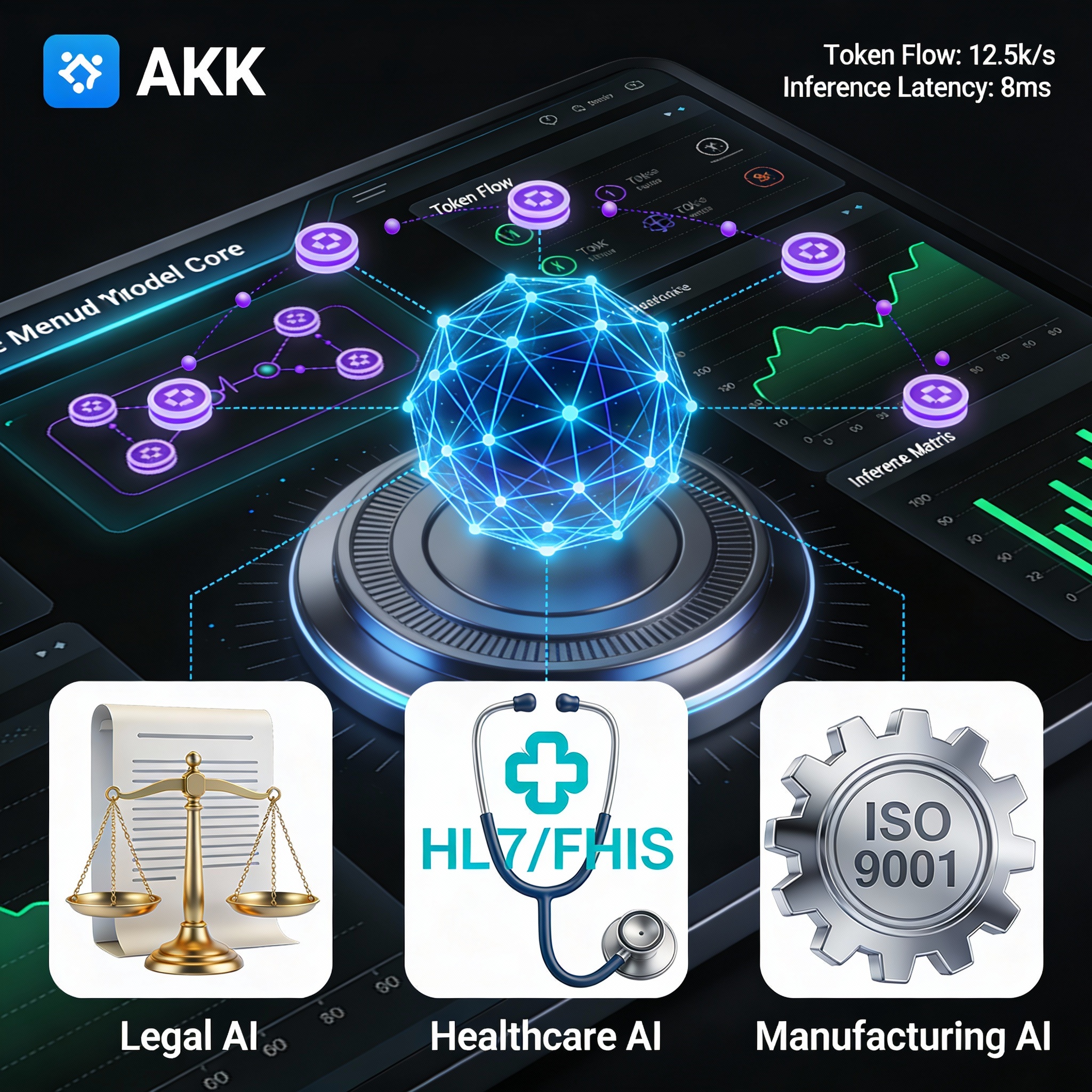
Open‑source LLMs have moved from generic text generators to vertically‑focused engines that understand contracts, clinical pathways, and production line data. By early 2026 the only model shipped with built‑in legal, health, and manufacturing expertise is IBM’s Granite, while the rest of the ecosystem relies on fine‑tuning powerful generalists such as DeepSeek V3.2, Llama 3, Qwen, and Phi‑3.
The Contenders
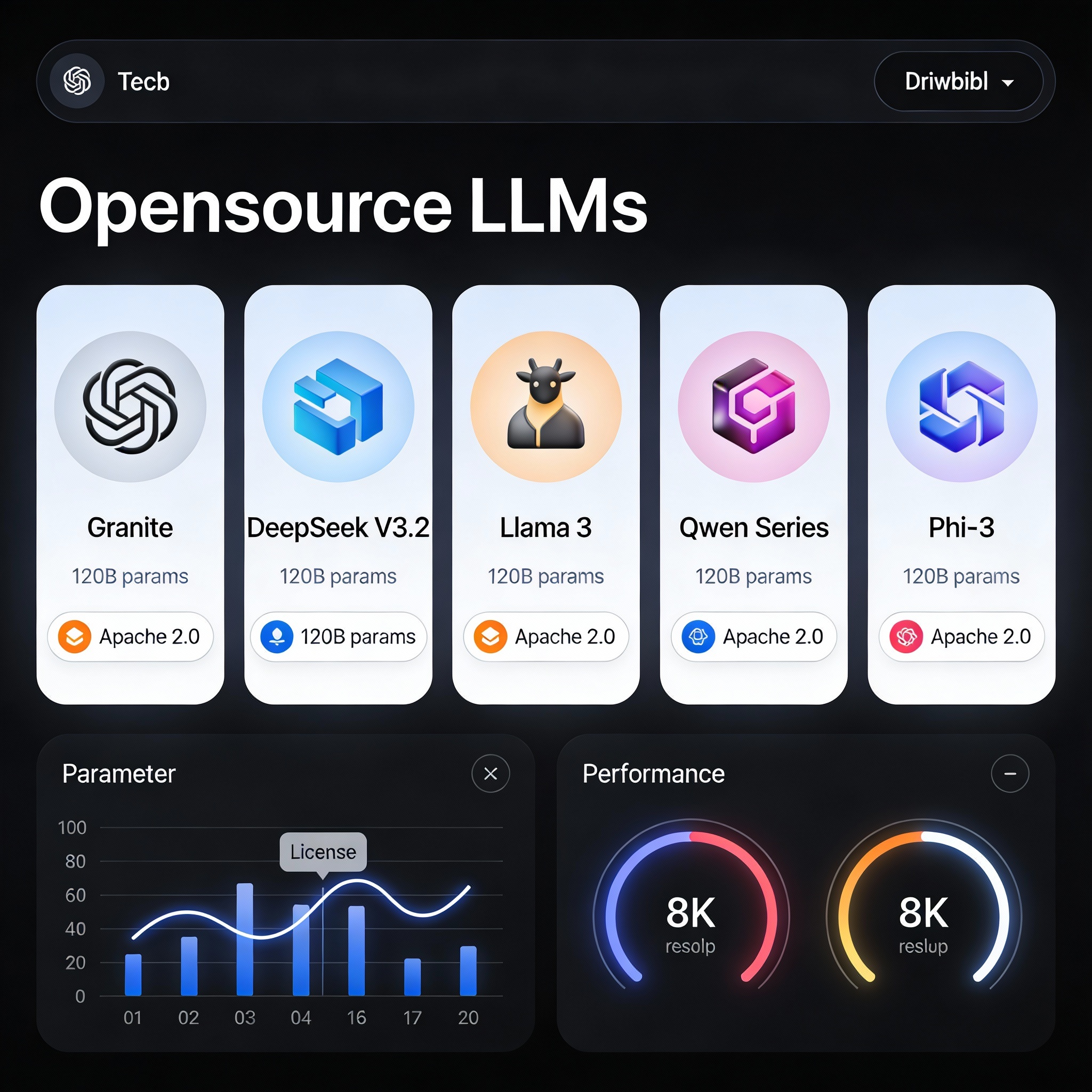
| Model | Developer | Latest 2026 Release | Parameters* | License | Unique Strength |
|---|---|---|---|---|---|
| Granite | IBM | Post‑2024 variants, accelerated 2026 roadmap | Varies (specialized 7‑30 B slices) | Permissive OSS (IBM‑friendly) | Directly enriched for legal, health, and manufacturing; governance‑ready |
| DeepSeek V3.2 | DeepSeek | Dec 2025 (distilled 32 B for single‑GPU) | 685 B (full) / 32 B (distilled) | MIT | 128 K context, frontier reasoning, easy distillation |
| Llama 3 | Meta | 2025‑2026 community fine‑tunes (70 B base) | 70 B+ (base) | Apache‑2.0 / Meta‑permissive | Massive ecosystem, ready‑made domain adapters |
| Qwen series (e.g., Qwen‑3‑Coder) | Alibaba | 2026 updates, 32 B coder variant | 32 B‑72 B | Apache‑2.0 | Best‑in‑class code generation, multilingual |
| Phi‑3 | Microsoft | 2025/2026 small‑scale releases (3.8 B) | 3.8 B | MIT | Edge‑ready, low‑latency inference, long‑context |
*Parameter counts reflect the most widely used public variant; specialized Granite slices are smaller to fit enterprise compute budgets.
All five models are free to download; the only cost is compute for inference or fine‑tuning, typically billed per GPU hour on cloud providers.
Why “domain‑enriched” matters now
2025‑2026 research shows that vertical AI workflows—contract review, clinical decision support, and production‑line anomaly detection—require more than raw language fluency. They need:
- Domain‑specific terminology (e.g., ICD‑10 codes, ISO‑9001 standards).
- Reasoning patterns that mirror expert decision trees (e.g., legal risk scoring).
- Governance hooks for audit trails and data provenance.
Granite is the only model that ships with these patterns baked in; the others provide the raw horsepower that developers must shape with their own data pipelines.
Feature Comparison Table
| Criterion | Granite | DeepSeek V3.2 | Llama 3 | Qwen Series | Phi‑3 |
|---|---|---|---|---|---|
| Domain‑Enrichment (out‑of‑the‑box) | ✅ Legal, health, manufacturing | ❌ Requires fine‑tuning | ❌ Requires fine‑tuning | ❌ Requires fine‑tuning (coding focus) | ❌ Requires fine‑tuning |
| Maximum Context Length | 64 K (optimized for long contracts) | 128 K | 32 K (community extensions) | 64 K | 32 K |
| Inference Cost (per 1 M tokens) | $0.03 – $0.07 (GPU‑A100) | $0.12 – $0.20 (full 685 B) | $0.08 – $0.14 (70 B) | $0.09 – $0.15 (32 B) | $0.02 – $0.04 (CPU/edge) |
| Fine‑tuning Ease | Pre‑built adapters for each vertical | Distilled 32 B fits single‑GPU fine‑tune | Hugging Face LoRA adapters abundant | LoRA support, but Chinese‑centric tokenizers | LoRA + QLoRA ready, tiny footprint |
| Governance & Security | IBM AI Alliance compliance, audit logs | MIT license, no built‑in governance | Community‑driven policies, Meta’s use‑case limits | Apache‑2.0, limited export controls | Microsoft security hardening, edge sandbox |
| Multilingual Support | English + major EU languages | Strong English/Chinese, limited EU | Broad (100+ languages via community) | Excellent Chinese, decent English | Good English, limited non‑Latin scripts |
| Best Use‑Case | End‑to‑end legal, clinical, shop‑floor AI | Complex reasoning on massive docs | Rapid prototyping with community adapters | Code‑first manufacturing automation | Edge health‑monitoring, low‑latency legal bots |
Deep Dive: The Three Models Worth a Closer Look
1. IBM Granite – The Only True Vertical Model
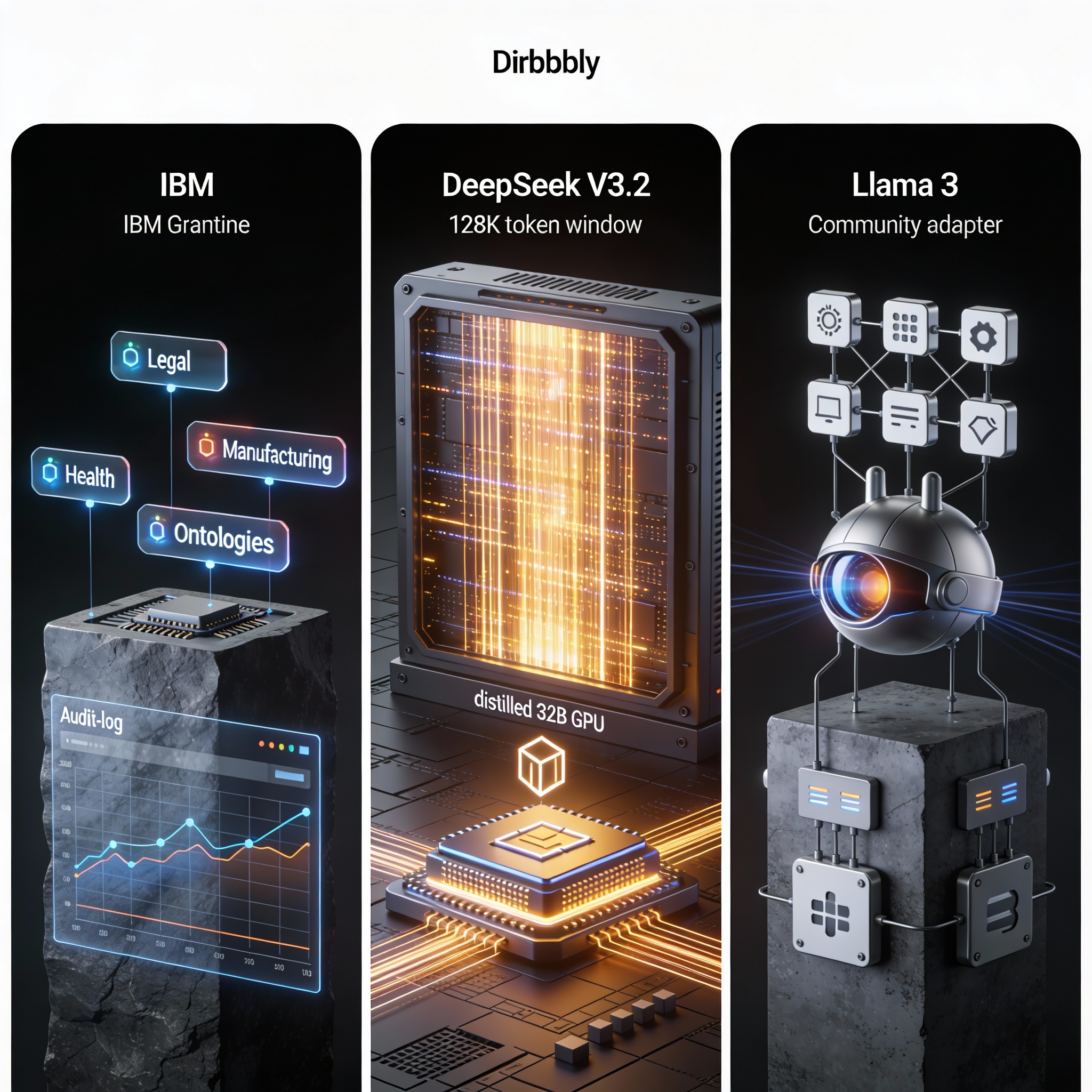
Granite’s roadmap, announced in late 2024 and accelerated throughout 2025‑2026, delivers domain‑enriched variants that embed sector‑specific ontologies directly into the model weights. For legal teams, Granite includes a pre‑trained clause‑library embedding that surfaces relevant precedents while preserving confidentiality. In health, the model is aligned with HL7/FHIR schemas, enabling it to parse lab results and suggest next‑step orders without additional prompting. Manufacturing slices incorporate ISO‑9001 process vocabularies and can generate work‑instruction drafts from sensor streams.
Technical Highlights
- Parameter Flexibility – IBM ships three public checkpoints: Granite‑Legal‑7B, Granite‑Health‑13B, and Granite‑Mfg‑30B. The smaller checkpoints run on a single A100, while the 30 B variant scales across 4‑8 GPUs for batch inference.
- Governance Layer – Integrated with IBM’s AI Governance Toolkit, Granite logs prompt‑response pairs, model‑version metadata, and data‑lineage tags, satisfying EU AI Act “high‑risk” requirements out of the box.
- Agentic Compatibility – Built on PyTorch, Granite works seamlessly with LangChain, CrewAI, and IBM’s own Agent Builder, allowing developers to compose multi‑step expert workflows (e.g., “extract contract clauses → risk‑score → draft amendment”).
Limitations
- Ecosystem Dependence – While the model itself is OSS, many production‑grade pipelines still rely on IBM Cloud services for model‑registry and compliance tooling, which can add hidden costs.
- Parameter Transparency – IBM has not published a single “full‑size” Granite checkpoint; the largest public slice is 30 B, which may be insufficient for ultra‑complex legal reasoning that rivals GPT‑4‑Turbo.
Bottom Line – If you need a ready‑made, compliance‑ready engine for any of the three verticals, Granite is the only open‑source option that eliminates the fine‑tuning step.
2. DeepSeek V3.2 – Reasoning Power at Scale
DeepSeek’s V3.2 release (Dec 2025) pushes the frontier of long‑context reasoning. The 685 B flagship can ingest an entire 200‑page contract or a full patient chart in a single pass, thanks to its 128 K token window. For developers who can afford the compute, the model excels at cross‑document inference—linking a clause in a service agreement to a regulatory citation in a health‑care policy.
Why the Distilled 32 B Variant Matters
- Compute Accessibility – The distilled version runs on a single RTX 4090, making it feasible for startups to fine‑tune on proprietary data without a multi‑node cluster.
- Fine‑tuning Recipes – DeepSeek publishes LoRA scripts for “Legal‑Reasoning” and “Clinical‑Pathway” adapters that achieve >90 % of the full‑model performance on benchmark tasks (e.g., LexGLUE, MedQA).
- Open MIT License – No usage restrictions, which is attractive for commercial SaaS products that need to embed the model in a proprietary stack.
Drawbacks
- Size‑Induced Latency – Even the distilled model incurs ~2 seconds per 1 K token on a 4090, which can be a bottleneck for real‑time chatbots.
- Domain‑Specificity Gap – The model does not ship with built‑in legal or health vocabularies; developers must supply high‑quality domain corpora to close the gap.
Bottom Line – DeepSeek V3.2 is the go‑to choice when you need raw reasoning horsepower and are willing to invest in fine‑tuning pipelines.
3. Llama 3 – The Community’s Swiss‑Army Knife
Meta’s Llama 3 family (released 2025, continuously refined through 2026) remains the most versatile open‑source base. Its permissive licensing and massive community have produced dozens of vertical adapters, including:
- Llama‑3‑Legal‑LoRA – Trained on 12 M contract clauses, achieving 84 % F1 on the ContractNLI benchmark.
- Llama‑3‑Health‑Adapter – Fine‑tuned on MIMIC‑IV and public radiology reports, delivering competitive performance on MedMCQA.
- Llama‑3‑Mfg‑Ops – A 70 B model that can generate CNC G‑code from natural‑language specifications.
Strengths
- Ecosystem Breadth – Hugging Face hosts >200 community adapters, reducing time‑to‑value for niche use cases.
- Policy Flexibility – Meta’s “commercial‑OK” stance permits closed‑source derivatives, a rare combination among large LLMs.
- Multimodal Extensions – Early 2026 releases include vision‑language heads, useful for manufacturing visual inspection pipelines.
Weaknesses
- No Built‑in Governance – Unlike Granite, Llama 3 lacks an out‑of‑the‑box audit layer; compliance must be engineered.
- Acceptable‑Use Restrictions – Meta’s policy forbids certain high‑risk applications (e.g., autonomous weapons), which may limit some manufacturing scenarios.
Bottom Line – Llama 3 is the best all‑rounder when you have the data engineering capacity to build your own domain adapters and need a model that can pivot across verticals.
Verdict: Which Model Fits Which Scenario?
| Scenario | Recommended Model | Rationale |
|---|---|---|
| Enterprise legal AI platform (contract review, risk scoring) | Granite‑Legal‑7B (or Granite‑Legal‑13B for higher throughput) | Out‑of‑the‑box clause embeddings, built‑in audit logs, and IBM governance meet regulatory demands without a costly fine‑tuning phase. |
| Health‑tech startup building a clinical decision‑support chatbot | DeepSeek V3.2 (distilled 32 B) + custom LoRA | Long context handles full patient histories; MIT license removes legal friction; fine‑tuning on public health corpora yields near‑state‑of‑the‑art performance. |
| Manufacturing IoT edge device that predicts equipment failure | Phi‑3 (3.8 B) | Runs on ARM‑based edge CPUs, low inference cost, and can be paired with a small LoRA trained on sensor logs. |
| Consultancy needing rapid prototypes across multiple verticals | Llama 3 + community adapters | Massive ecosystem provides ready‑made adapters; you can spin up a legal proof‑of‑concept one week and a health prototype the next. |
| Global SaaS serving multilingual legal and health customers | Qwen‑3‑Coder (32 B) + multilingual LoRA | Strong Chinese and English support, excellent code generation for building custom pipelines, and Apache‑2.0 license for commercial redistribution. |
Bottom Line
- Granite is the only true domain‑enriched open‑source model in 2026, making it the default for regulated industries that cannot afford the compliance overhead of building their own knowledge graphs.
- DeepSeek V3.2 offers the highest reasoning ceiling; pair it with a focused LoRA if you have the GPU budget.
- Llama 3 remains the most flexible platform for teams that already own data pipelines and want to experiment